Not Your Keys, Not Your Rules: Cutting Through the Custody Hype to Find Wallets That Actually Deliver
In the cryptocurrency world, few phrases carry more weight than the old adage: not your keys, not your coins. It has been repeated so often that it has nearly lost its meaning—yet the principle behind it has never been more relevant. As the digital asset space matures and custody solutions multiply, the question of who truly controls your crypto has become layered, complicated, and deliberately obscured by marketing language designed to make investors feel secure without actually making them so.
For US-based investors navigating this landscape, understanding the structural differences between custody models is not a technical exercise reserved for developers. It is a foundational investment decision—one that determines your exposure to counterparty risk, your legal recourse in a crisis, and ultimately, whether you are an owner or merely a creditor.
What Custody Actually Means in Practice
At its core, cryptocurrency custody refers to who holds the private keys that authorize transactions on a blockchain. Whoever controls those keys controls the assets. There is no nuance in the cryptographic reality: possession of the private key equals ownership. Everything else—account dashboards, portfolio trackers, two-factor authentication screens—is an interface built on top of that fundamental truth.
The custody debate, therefore, is not really about technology features. It is about where the private key lives, who can access it, and under what legal or operational conditions that access can be restricted, transferred, or lost entirely.
Self-Custody Wallets: Maximum Control, Maximum Responsibility
Self-custody wallets—whether software-based applications or hardware devices—place the private key in the hands of the investor. No third party has access, no platform can freeze your account, and no corporate insolvency can strand your assets. For investors who have absorbed the lessons of exchange collapses and custodial failures that have periodically rattled the US crypto market, this model represents the gold standard of genuine ownership.
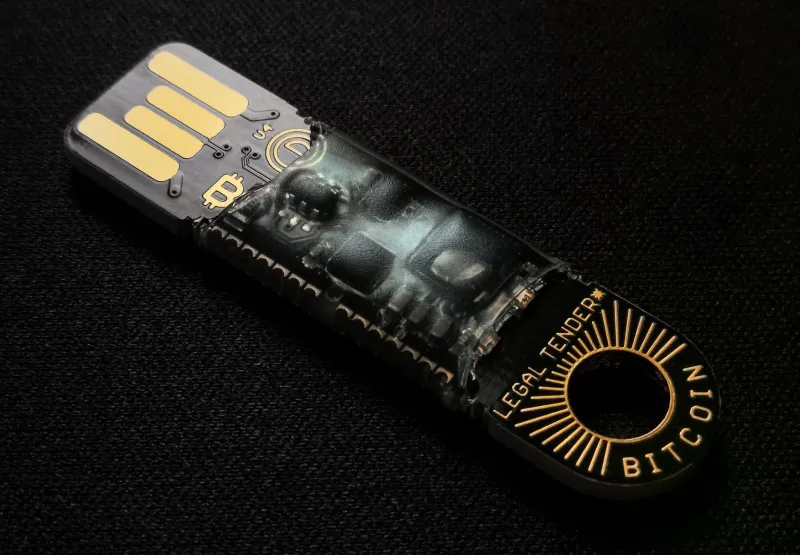
Hardware wallets, in particular, store private keys on an offline device, isolating them from internet-connected threats. Leading hardware options generate keys in a secure environment and require physical confirmation for transactions, making remote compromise significantly more difficult.
The trade-off, however, is unforgiving. Lose your seed phrase—the master recovery sequence generated when you set up the wallet—and your assets are permanently inaccessible. There is no password reset, no customer support escalation, no regulatory body that can intervene. Self-custody demands a level of personal accountability that many investors underestimate until something goes wrong.
For those committed to the model, best practices include storing seed phrases offline in multiple secure physical locations, using passphrase extensions for additional security layers, and periodically verifying that recovery procedures actually work before assets are at stake.
Institutional Custodians: Regulated Convenience With Hidden Ceilings
On the opposite end of the spectrum sit institutional custodians—regulated entities, many of them registered with US financial authorities, that hold digital assets on behalf of clients. Major banks, licensed trust companies, and dedicated crypto custodians operating under state or federal frameworks offer insurance coverage, compliance infrastructure, and the kind of operational resilience that individual self-custody cannot replicate.
For high-net-worth investors, family offices, and entities with fiduciary obligations, institutional custody offers legitimate advantages. Assets held under qualified custodians may be protected in ways that exchange-held assets are not, and the regulatory oversight provides at least a framework for dispute resolution.
But the language used to market these services deserves scrutiny. Phrases like "your assets are always accessible" and "full control over your portfolio" are technically accurate in normal operating conditions—and potentially meaningless during the conditions that actually matter. Custodians can restrict withdrawals during periods of market stress, face regulatory freezes, or become entangled in legal proceedings that lock client assets for extended periods. The investor remains the beneficial owner on paper, but the practical control resides with the institution.
This distinction—between legal ownership and operational control—is one that too many investors discover only in hindsight.
Hybrid Solutions: The Middle Ground and Its Complications
Hybrid custody models have gained significant traction as platforms attempt to capture both convenience and the appearance of user sovereignty. Multi-party computation (MPC) wallets, for instance, distribute key fragments across multiple parties so that no single entity ever holds a complete private key. Threshold signature schemes require cooperation between the user and the platform to authorize transactions.
These architectures represent genuine cryptographic innovation. They can reduce single points of failure, enable transaction recovery mechanisms, and satisfy institutional compliance requirements without centralizing full key control. Several platforms serving US investors have built compelling products on these foundations.
However, hybrid solutions introduce a critical question that marketing materials rarely address plainly: what happens when the platform goes offline, is acquired, or shuts down? If the user's key fragment is held in a proprietary system that ceases to operate, the practical ability to recover assets depends entirely on whether the platform has designed and documented a viable exit path. Many have not.
Before committing assets to any hybrid custody solution, investors should demand clear, written answers to the following: Can you independently recover your assets without the platform's cooperation? What is the documented recovery procedure? Has it been audited by an independent third party?
Exchange Custody: The Persistent Risk Most Investors Accept Without Reading the Terms
A significant portion of US retail crypto investors hold their assets directly on exchange platforms—a model that should be understood for precisely what it is. When assets sit on an exchange, the investor holds an IOU. The exchange controls the private keys. The investor's account balance is a liability on the exchange's books, not a segregated property holding.
The practical implications of this arrangement have been demonstrated repeatedly in the US market. Exchange insolvencies have left account holders waiting in creditor queues rather than simply withdrawing their own property. Account freezes have been imposed with little notice. The convenience of exchange-held assets is real; the ownership claim is conditional.
This does not mean exchange custody is always inappropriate. For active traders who need rapid execution, keeping a working allocation on a reputable, regulated platform is a reasonable operational choice. The error lies in treating exchange balances as equivalent to self-custodied holdings from a security standpoint.
Making the Right Choice for Your Situation
No single custody model serves every investor equally well, and the honest answer is that most serious participants in the US digital asset market will use multiple solutions simultaneously. Long-term holdings may belong in hardware wallets. Actively traded positions may sit on regulated exchanges. Institutional investors may layer qualified custodians on top of internal key management procedures.
What matters is that every choice is made deliberately, with a clear-eyed understanding of what the platform controls and what you control. The custody landscape will continue to evolve, and new models will emerge with compelling marketing narratives. The investors who rule their own financial destinies will be those who ask the right questions before committing their assets—not after.
At King88 Group, we believe that genuine control over digital wealth begins with understanding the infrastructure underneath the interface. The chain does not lie. The terms of service sometimes do.