Policy Fault Lines: How America's Evolving Crypto Regulations Are Separating Survivors From the Doomed
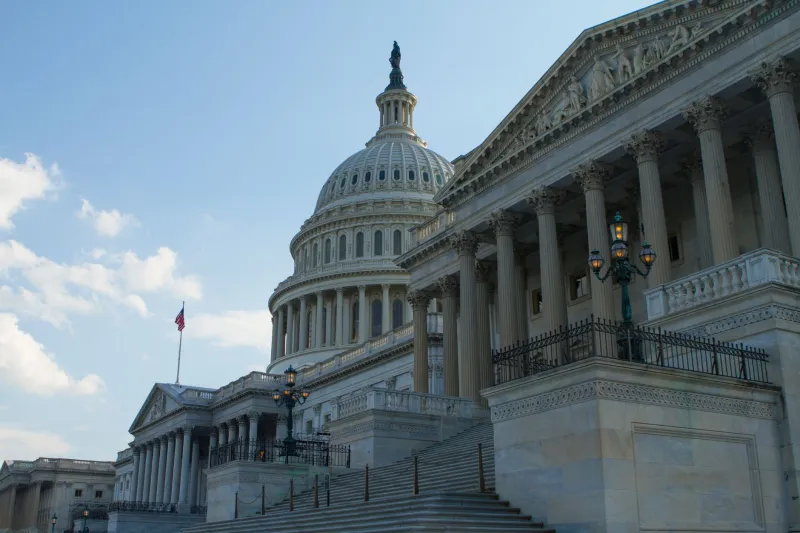
For years, the prevailing narrative around US crypto regulation was one of paralysis — competing agencies, contradictory guidance, and legislative gridlock that left investors perpetually guessing. That era is ending. What is replacing it is something more consequential: a selective enforcement regime that is quietly sorting the digital asset ecosystem into two distinct categories — those gaining institutional legitimacy and those facing an existential reckoning.
For investors who understand the mechanics of this shift, the moment represents a rare opportunity to reposition ahead of the crowd. For those who do not, the losses will be difficult to recover from.
The Federal Tug-of-War and What It Actually Means
The tension between the Securities and Exchange Commission and the Commodity Futures Trading Commission has never been a bureaucratic curiosity — it is the central axis around which crypto's regulatory fate rotates. The SEC's long-standing posture that most digital tokens constitute unregistered securities has created a persistent overhang for thousands of assets. Meanwhile, the CFTC has staked a competing claim over assets it classifies as commodities, most prominently Bitcoin and Ethereum.
This jurisdictional contest has a practical consequence that many retail investors overlook: assets that fall clearly under CFTC oversight tend to attract institutional capital more readily, because commodity classification carries a comparatively well-understood compliance framework. Assets that remain in the SEC's crosshairs, by contrast, face a structural disadvantage regardless of their underlying technology. Any project that cannot credibly demonstrate it passes the Howey Test — the legal standard for determining whether an asset is a security — is operating on borrowed time.
The implication for portfolio construction is direct. Concentrating holdings in assets with clear commodity classification or those that have reached explicit settlement agreements with federal regulators represents a measurably lower regulatory risk profile than holding tokens whose legal status remains contested.
State-Level Divergence: The Hidden Variable in Asset Survival
While federal dynamics dominate headlines, state-level regulatory divergence is creating a secondary layer of risk and opportunity that sophisticated investors are already pricing in.
Wyoming has emerged as the most crypto-permissive jurisdiction in the country, having established a legal framework for decentralized autonomous organizations and chartered several crypto-native banks. New York, by contrast, operates the BitLicense regime — one of the most demanding compliance structures in the world — which has functionally excluded numerous projects from the state's market. Texas has positioned itself as a Bitcoin mining hub with favorable energy policy and legislative sympathy toward proof-of-work infrastructure.
This patchwork matters because it shapes where institutional infrastructure is being built. Custody solutions, regulated exchanges, and tokenized asset platforms are disproportionately concentrating in jurisdictions with clear, workable frameworks. Assets that are well-integrated into these emerging institutional ecosystems — or whose underlying protocols are being adopted by state-chartered entities — are accumulating structural advantages that compound over time.
Investors should treat regulatory geography as a signal. If a project's primary use cases are being adopted by entities operating in high-compliance jurisdictions, that is meaningful evidence of durability.
Identifying the Existential Threats
Not every project facing regulatory pressure is doomed. But certain patterns reliably identify assets that are unlikely to survive sustained scrutiny.
The most obvious warning sign is a token whose entire value proposition depends on mechanics that regulators have already explicitly targeted. Privacy coins that obscure transaction trails face a particularly hostile environment given the Financial Crimes Enforcement Network's expanding reporting requirements. Tokens associated with yield-generating structures that resemble unregistered securities offerings are similarly exposed. Projects that have received Wells Notices from the SEC — a formal notification of impending enforcement action — should be treated as high-risk positions regardless of short-term price behavior.
A second, less-discussed warning sign is jurisdictional avoidance. Projects that have deliberately structured themselves to minimize US regulatory contact — offshore foundations, US-restricted token sales, intentional opacity around team identity — are not being prudent. They are signaling that they cannot withstand the scrutiny that institutional adoption requires. Over time, this limits their addressable market in meaningful ways.
The Assets Gaining Ground
On the other side of the ledger, a distinct cohort of digital assets is accumulating regulatory momentum in ways that should influence portfolio weighting.
Bitcoin's position has never been stronger from a regulatory standpoint. The approval of spot Bitcoin ETFs by the SEC in early 2024 represented a structural legitimization that fundamentally altered the asset's institutional accessibility. Ethereum, despite ongoing questions about its proof-of-stake validation model, has benefited from CFTC statements treating it as a commodity and from its central role in the tokenized asset infrastructure being built by major financial institutions.
Beyond these two anchors, a smaller set of assets is gaining ground through a different mechanism: direct integration with regulated financial infrastructure. Stablecoins issued by entities seeking formal banking charters, tokens powering compliance-grade DeFi protocols, and assets embedded in federally supervised custody solutions are all accruing a form of regulatory legitimacy by association.
Positioning Ahead of Clarity
The instinct to wait for full regulatory clarity before making portfolio decisions is understandable but strategically costly. By the time clarity arrives, the repricing of compliant assets will already have occurred. The opportunity lies in positioning before the consensus forms.
A disciplined approach involves three moves. First, audit existing holdings against the regulatory risk criteria outlined above. Any position in an asset with unresolved SEC enforcement exposure, jurisdictional avoidance patterns, or a value proposition that depends on legally contested mechanics deserves a hard reassessment.
Second, increase exposure to assets with demonstrated institutional integration — not just institutional interest, but actual structural embedding in regulated financial infrastructure. The difference between an asset that hedge funds are speculating on and one that a state-chartered bank is using as settlement infrastructure is enormous from a regulatory durability standpoint.
Third, monitor legislative developments at the federal level with the same rigor applied to on-chain metrics. Bills that establish clear commodity versus security distinctions for digital assets will, when passed, trigger rapid repricing. The investors who have already positioned themselves accordingly will capture the bulk of that move.
The regulatory reversal is not a future event. It is already in motion. The question is whether your portfolio reflects where the rules are heading — or where they used to be.